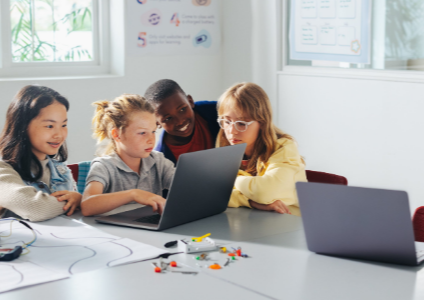
Technology plays a crucial role in modern education by enhancing student engagement and enabling personalized learning experiences. Interactive tools and adaptive technologies allow learners to progress at their own pace while catering to diverse learning styles. Furthermore, digital platforms encourage collaboration and communication among peers, fostering a sense of community. As education evolves, the implications of these advancements raise important questions about their long-term effects on traditional learning environments and student outcomes.
Enhancing Engagement Through Interactive Learning Tools
Interactive learning tools have revolutionized the educational landscape by actively engaging students in the learning process.
Gamified learning, which incorporates game design elements, enhances motivation and retention.
Meanwhile, virtual reality immerses learners in interactive environments, fostering experiential understanding.
Together, these technologies not only spark curiosity but also empower students to take charge of their education, promoting a sense of autonomy and exploration.
Personalizing Education With Adaptive Technologies
The integration of technology in education extends beyond interactive tools to include adaptive technologies that tailor learning experiences to individual student needs.
These systems utilize adaptive learning principles, allowing for individualized instruction that responds in real-time to a student’s progress and preferences.
Read Also: How Hackers Exploit Technology
Fostering Collaboration and Communication Among Students
While traditional classrooms often emphasize individual learning, technology has revolutionized the way students collaborate and communicate with one another.
Digital platforms facilitate group projects, allowing students to connect and share ideas freely. Tools for peer feedback enhance the learning experience, enabling constructive criticism and diverse perspectives.
This interconnectedness not only enriches academic outcomes but also fosters a sense of community among learners.
Developing Critical Skills for the Future Workforce
As technology continues to reshape educational landscapes, it plays a crucial role in cultivating the critical skills necessary for students to thrive in the future workforce.
Digital literacy empowers students to navigate complex information, while enhanced problem-solving abilities enable them to tackle real-world challenges.
Conclusion
In conclusion, the integration of technology in education significantly enriches the learning experience by fostering engagement, personalization, and collaboration. For instance, a hypothetical classroom utilizing gamified learning platforms could see a previously disengaged student, now motivated and actively participating, ultimately discovering a passion for science. This transformation not only highlights the profound impact of technology on individual learners but also underscores its potential to prepare students for a dynamic future, where adaptability and collaboration are paramount.